Science News
 American
Science News for 10 September 2025
American
Science News for 10 September 2025
This rare white dwarf looks normal, until Hubble shows its explosive secret
Science Daily - 10 Sep 2025 23:43
Hubble has uncovered a rare ultra-massive white dwarf created in a violent star merger. Once thought to be ordinary, the stars ultraviolet signature revealed its explosive history and hinted that such cosmic collisions m...
NASAs celestial Accident unlocks secrets of Jupiter and Saturn
Science Daily - 10 Sep 2025 23:31
Astronomers studying an oddball brown dwarf called The Accident have finally spotted silane, a long-predicted silicon molecule missing from Jupiter and Saturns skies. Its ancient, oxygen-poor atmosphere allowed the molec...
Life on Mars? NASA discovers potential biosignatures in Martian mudstones
Science Daily - 10 Sep 2025 22:30
NASAs Perseverance rover has discovered mudstones in Mars Jezero Crater that contain organic carbon and unusual textures hinting at possible biosignatures. These findings suggest that ancient Martian environments may hav...
Mapping the secret escape routes of deadly brain tumors
Science Daily - 10 Sep 2025 21:24
Glioblastomas stealthy spread has met a new challenge: MRI-powered fluid flow mapping that reveals where the cancer is likely to invade next. The innovation is now being advanced by a spinoff company to guide personalize...
DNA cassette tape can store every song ever recorded
New Scientist - 10 Sep 2025 20:00
By combining the information storage capabilities of DNA with a design inspired by a cassette tape, researchers have created a storage medium that can hold 36 petabytes of data
Antibody cocktail could work as a universal flu treatment
New Scientist - 10 Sep 2025 20:00
A mix of three antibodies seems to protect mice against several strains of influenza and could one day be useful against seasonal flu or pandemics
Permeable inspection of pharmaceuticals: Real-time tablet quality inspection system developed
Phys.org - 10 Sep 2025 20:00
Led by Assistant Professor Kou Li, a research group at Chuo University, Japan, has developed a synergetic strategy among non-destructive terahertz (THz)-infrared (IR) photo-monitoring techniques and ultrabroadband sensit...
Who were the mystery humans behind Indonesias million-year-old tools?
Science Daily - 10 Sep 2025 19:42
A groundbreaking discovery on the Indonesian island of Sulawesi reveals that early hominins crossed treacherous seas over a million years ago, leaving behind stone tools that reshape our understanding of ancient migratio...
Brain Dial That Controls Urge to Eat Discovered
Neuroscience News - 10 Sep 2025 19:23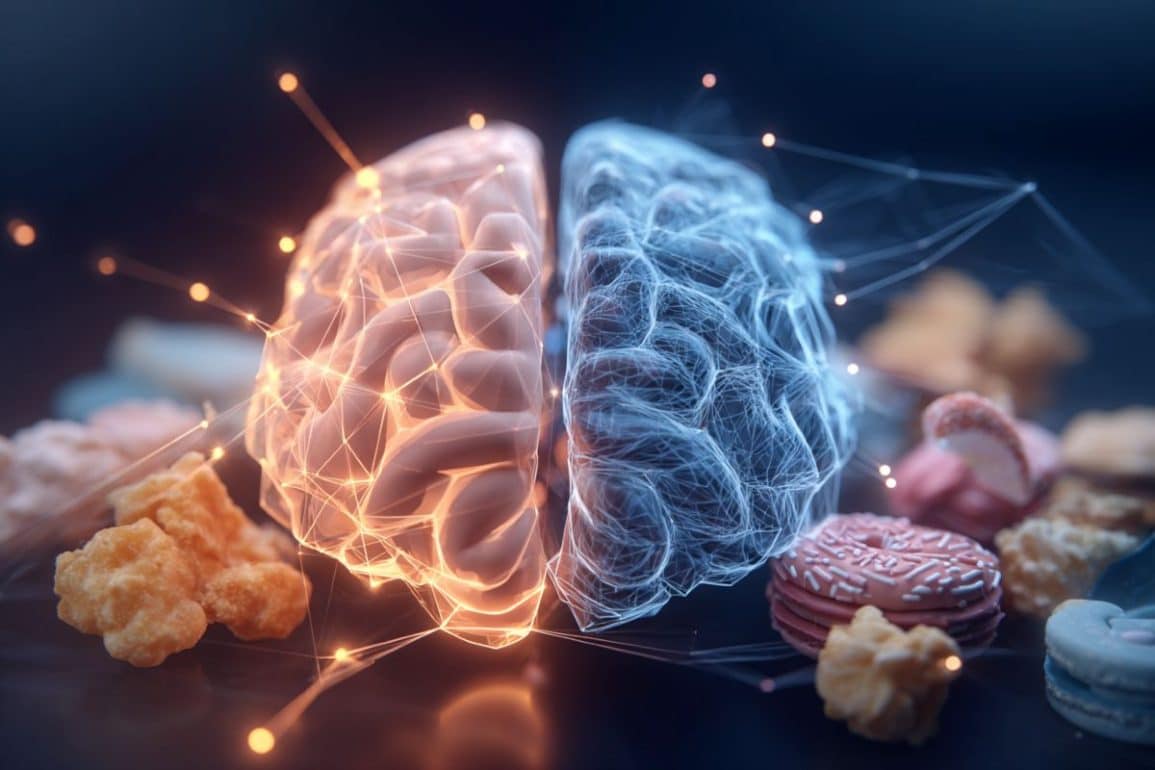 Researchers have uncovered a brain circuit in mice that acts as a dial for consumption, controlling the urge to eat sweets, fats, salt, and other foods. The circuit links the amygdala to the BNST, a region tied to feedin...
Matt Richtel grapples with how modern life is warping adolescence
New Scientist - 10 Sep 2025 19:00
Not only are children starting puberty earlier, they face a digital world where, for good and bad, most of their interactions are internalised. How We Grow Up is scary, illuminating and hopeful, says Chris Simms
Telling incoming aliens from space rocks on a scale of 1 to 10!
New Scientist - 10 Sep 2025 19:00
Feedback is mystified by a new way to assess interstellar visitors and the risks they pose, be they lumps of ice or alien craft. Just pray they dont top out on the Loeb Scale
Tim Spector's guide to fermentation is meticulous and persuasive
New Scientist - 10 Sep 2025 19:00
We know fermented foods do us good, but the ZOE founder's new book still surprises with fascinating facts - and avoids feeling like an ad for his gut supplements, says Helen Thomson
Why your nose could be the perfect window into your mental state
New Scientist - 10 Sep 2025 19:00
Diagnosing mental health conditions like anxiety and depression can be difficult, but it turns out that your nose could help doctors understand when you are feeling the strain, says Gillian Forrester
Exciting new research shows ways to defuse the "green backlash"
New Scientist - 10 Sep 2025 19:00
There is growing opposition to environmental policies around the world, but could researchers have found a way around this, asks Graham Lawton
Alien: Earth adds surprisingly good TV dimension to veteran sci-fi
New Scientist - 10 Sep 2025 19:00
After fifty years of books, games and movies, what more could the Aliens franchise deliver? An inventive TV show, with fresh monsters and new heroes, finds our TV critic Bethan Ackerley
How to pick the right fertiliser for all your different plants
New Scientist - 10 Sep 2025 19:00
There are three key nutrients that all plants need - nitrogen, phosphorous and potassium - but in different amounts. So finding fertiliser that suits all your plants might seem tricky, but there is a simple solution, say...
How the Brain Learns to See
Neuroscience News - 10 Sep 2025 18:53 Researchers discovered how the brain develops reliable visual processing once the eyes open. Early on, visual inputs and modular brain responses are mismatched, creating inconsistent patterns.
'Incredibly exciting': NASA claims it's found the 'clearest sign' yet of past life on Mars
Live Science - 10 Sep 2025 18:11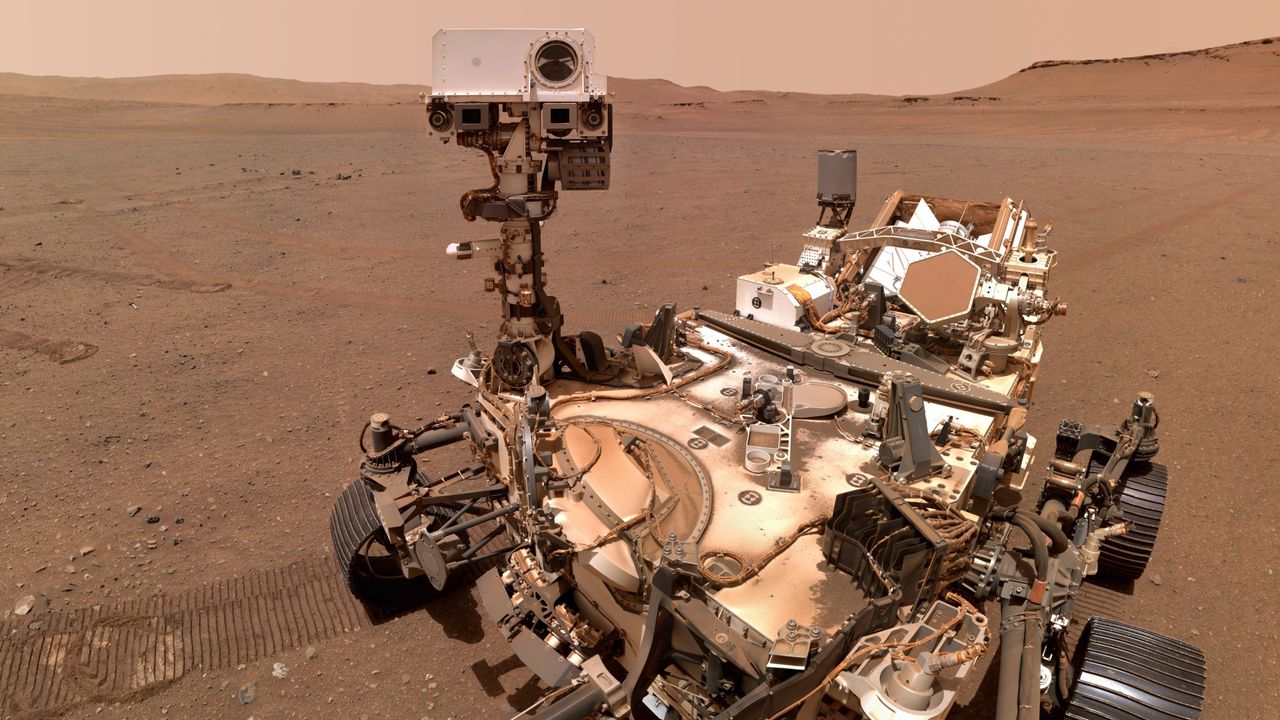 NASA scientists have found more intriguing details on speckled Martian rocks spotted by the Perseverance rover. But bringing samples back to Earth will be key.
Eye Protein Levels Linked to Cognitive Decline
Neuroscience News - 10 Sep 2025 18:05 A new study reveals that levels of the SLIT2 protein in eye and blood samples are linked to cognitive performance in middle-aged adults. Researchers found that lower SLIT2 in vitreous humor correlated with poorer memory ...
Scientists just built a detector that could finally catch dark matter
Science Daily - 10 Sep 2025 18:03
Physicists have unveiled a new superconducting detector sensitive enough to hunt dark matter particles smaller than electrons. By capturing faint photon signals, the device pushes the search into uncharted territory.
'Our hearts stopped': Scientists find baby pterosaurs died in violent Jurassic storm 150 million years ago
Live Science - 10 Sep 2025 17:20 Researchers found storm injuries during a baby pterosaur post-mortem, solving a Jurassic mystery that was 150 million years in the making.
We evolved to match local micronutrient levels, which may be a problem
New Scientist - 10 Sep 2025 17:00
Most human populations evolved to cope with low or high local levels of micronutrients such as zinc, but these localised adaptations might now be problematic because we travel more than our ancestors did
 Global
 Great Britain
 Indian
 South Africa