Space News
 American
Space News for 7 March 2026
American
Space News for 7 March 2026
Red dwarf stars might starve alien plants of the 'quality' light they need to breathe
Phys.org - 7 Mar 2026 18:00
Red dwarfs make up the vast majority of stars in the galaxy. Such ubiquity means they host the majority of rocky exoplanets we've found so far-which in turn makes them interesting for astrobiological surveys. However...
A jellyfish or a brain? Tell us what you see in this gorgeous deep-space nebula photo
SPACE.com - 7 Mar 2026 17:00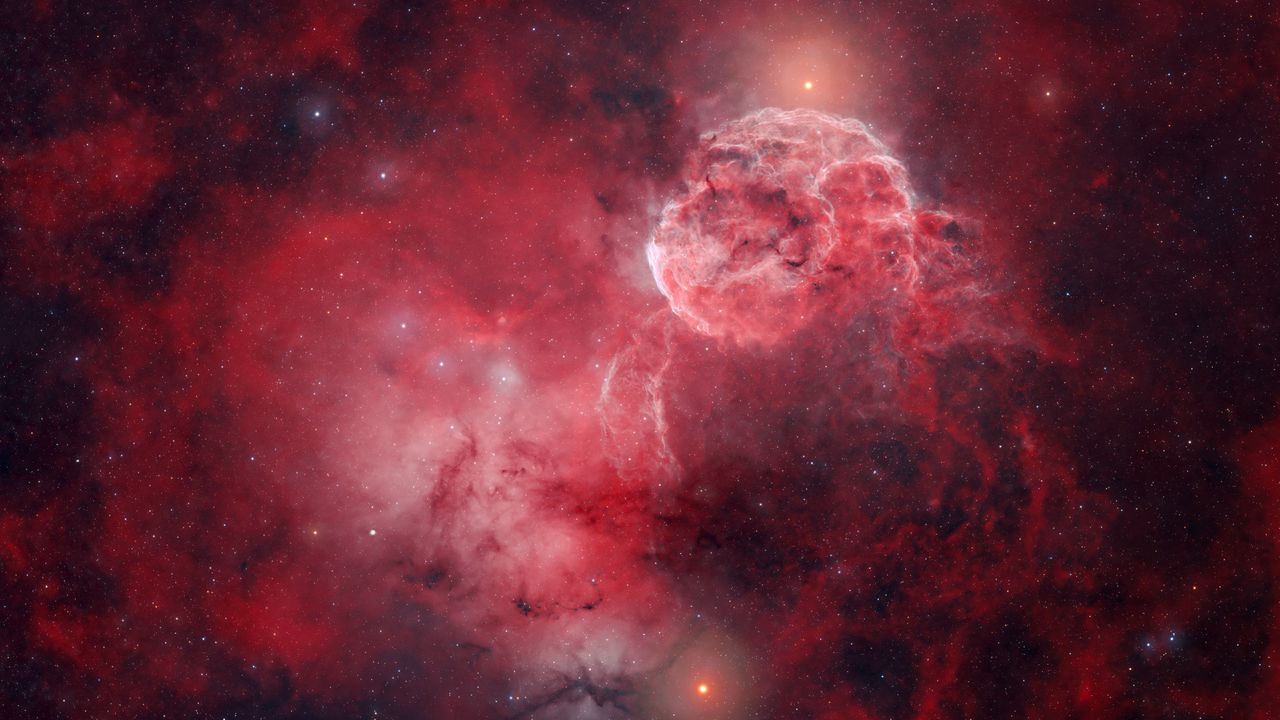 The nebula was formed when a star went supernova 5,000 light-years from Earth.
This Week In Space podcast: Episode 200 - Our 200th Episode Listener Special!
SPACE.com - 7 Mar 2026 16:45 On Episode 200 of This Week In Space, Rod Pyle and Tariq Malik celebrate their 200th episode with their annual listener special!
Bungie explains Marathon's 'graphic retro futurism' aesthetic and the 'live narrative' lessons it learned from 'Destiny' (Interview)
SPACE.com - 7 Mar 2026 16:00 As "Marathon" finally launches, we grill a trio of Bungie developers about the world, aesthetic, and ambitions of this sci-fi extraction shooter.
Can we grow life on Mars? Experiments show potential in simulated extraterrestrial soil
Phys.org - 7 Mar 2026 15:00
Life's capacity to survive in simulated lunar and Martian soils has been explored in two papers published in Scientific Reports. Treating simulated lunar soil with both symbiotic fungi and worm-produced compost can s...
Sigweis night vision binoculars review
SPACE.com - 7 Mar 2026 14:00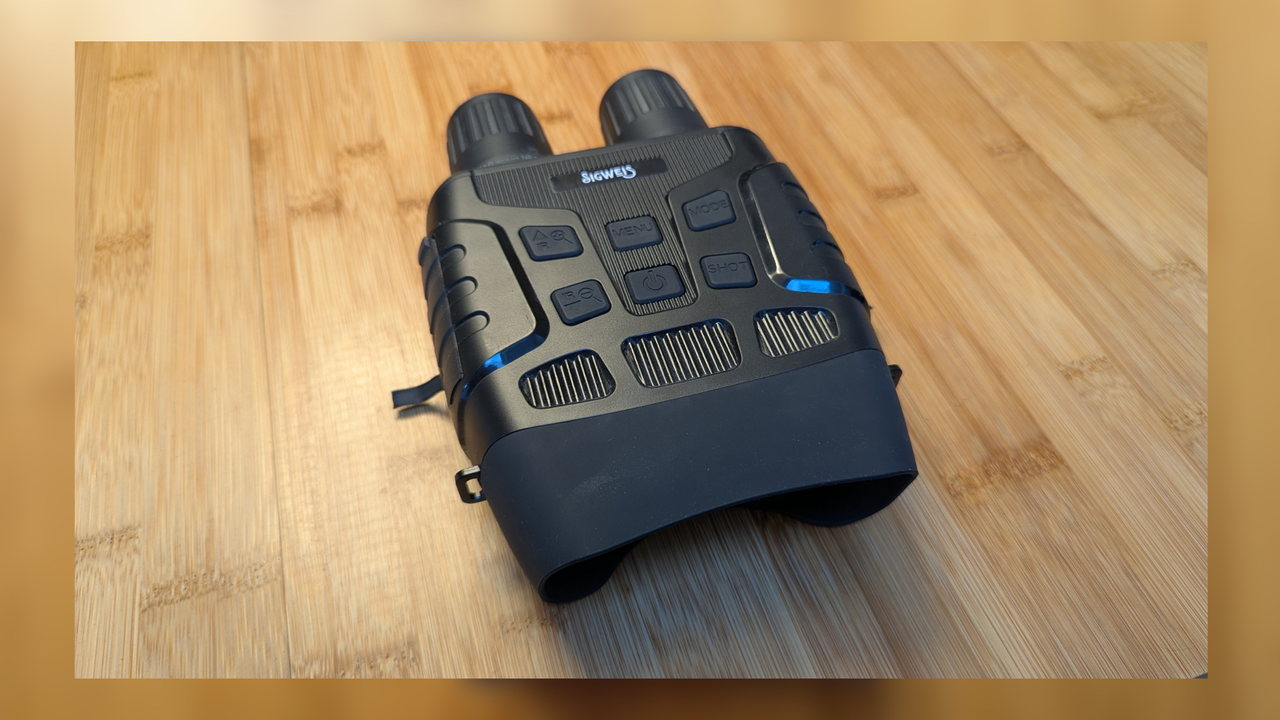 We love these night vision binoculars, but we don't love having to buy new batteries so often.
Air Force lab awards BlackSky contract worth up to $99 million for large optical satellite payload
Space News - 7 Mar 2026 13:41 Program will test large segmented optical system for future surveillance satellites The post Air Force lab awards BlackSky contract worth up to $99 million for large optical satellite payload appeared first on SpaceNews....
The coldest 'stars' in the galaxy might actually be alien megastructures
Phys.org - 7 Mar 2026 13:30
Ever since physicist Freeman Dyson first proposed the concept in 1960, the "Dyson sphere" has been the holy grail of techno-signature hunters. A highly advanced civilization could build a "sphere" (or, in...
Living in space can change where your brain sits in your skull - new research
SPACE.com - 7 Mar 2026 13:00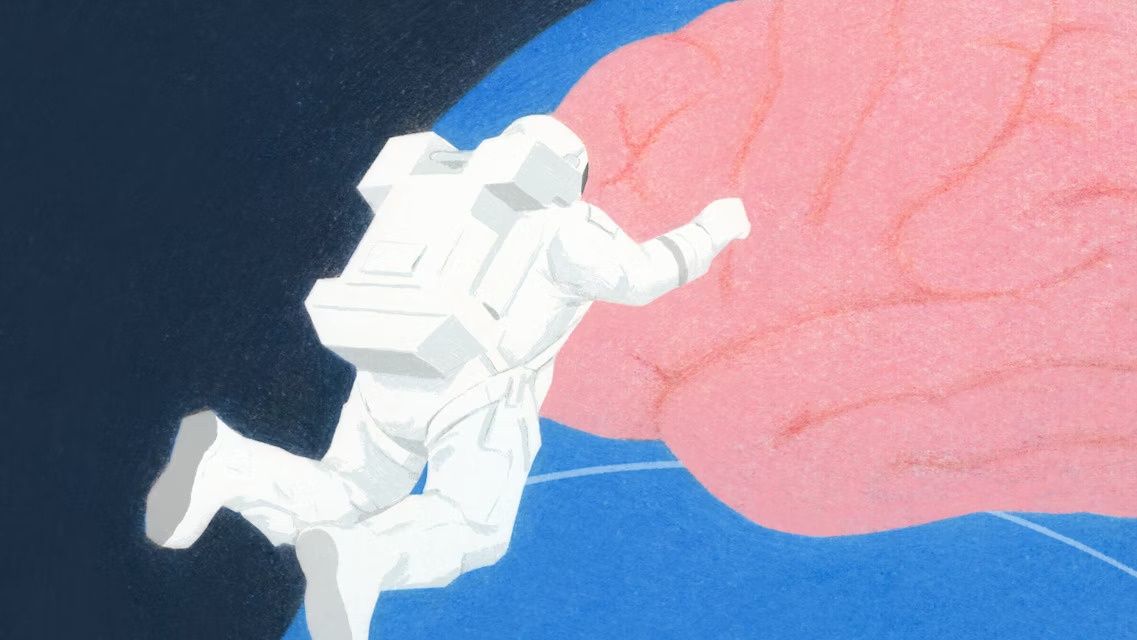 Going to space is harsh on the human body, and as a new study from our research team finds, the brain shifts upward and backward and deforms inside the skull after spaceflight.
V615 Vul shows rare hybrid nova signature after rapid two-day rise
Phys.org - 7 Mar 2026 11:30
Italian astronomers have performed extensive spectroscopic monitoring of a recently discovered nova known as Vulpeculae 2024, also known as V615 Vul. Results of the new observations, presented in a paper published in the...
NASA's DART test for planetary defense proved it can shift an asteroid's solar orbit
Phys.org - 7 Mar 2026 09:13
Four years ago, NASA purposely smashed a spacecraft into a small asteroid to see if they could deflect it-a test to prove humanity could protect Earth from threatening space rocks.
 Global
 Great Britain
 Indian
 South Africa